Can people at high risk of sarcopenia be identified in community settings using information that is already available through routine health checkups, combined with only a few simple additional measurements?
A research team including HyeYeon Shin of Yonsei University’s Graduate School of Health Sciences evaluated an AI-based mobile screening system designed to do just that.
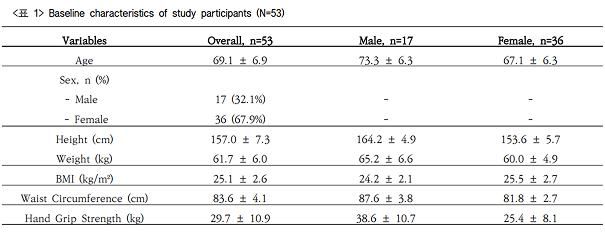
The study was conducted from January 22 to February 21, 2025, among 53 adults aged 50 or older living in Jeongseon and Pyeongchang, Gangwon Province. The system integrated National Health Insurance Service health checkup records, electronic grip strength measurements, and a five-item SARC-F questionnaire to generate sarcopenia risk results.
Addressing the Accessibility Challenge in Sarcopenia Screening
Sarcopenia is characterized by an age-related decline in skeletal muscle mass and function and is associated with outcomes including falls and physical functional decline.
One of the issues highlighted by the study is access to screening and assessment.
The paper notes that quantitative assessment of muscle mass may require equipment such as dual-energy X-ray absorptiometry, or DXA, and bioelectrical impedance analysis, or BIA. In rural regions such as Jeongseon and Pyeongchang, where access to large medical institutions can be limited, systematically applying such equipment-based procedures to large populations can be difficult.
At the same time, national health checkup records already contain information that may be useful for evaluating sarcopenia risk, including age and anthropometric measurements.
The researchers therefore explored whether those existing records could be combined with simple measurements that can be collected in community settings.
Combining Health Checkup Records with Grip Strength and SARC-F
The mobile screening system integrated three primary sources of information.
First, individual health checkup records were accessed through an authenticated National Health Insurance Service data linkage process. Second, grip strength was measured using a standardized electronic dynamometer. Third, participants completed SARC-F, a five-item questionnaire covering strength, assistance with walking, rising from a chair, climbing stairs and falls.
The AI model used six core variables: sex, age, body mass index, waist circumference, grip strength and SARC-F score.
Because the study involved a relatively small sample of 53 participants, the researchers used a Random Forest algorithm and applied Stratified 5-Fold Cross-validation to assess model performance and reduce the risk of overfitting. The study also evaluated metrics including sensitivity, specificity, accuracy and AUC.
An important distinction, however, is that the system was not designed to provide a clinical diagnosis of sarcopenia.
The study defined its prediction target as “Possible Sarcopenia” according to the community screening algorithm in the Asian Working Group for Sarcopenia 2019 guidelines. For the study’s reference standard, participants were classified as high risk when they had a SARC-F score of four or higher together with reduced grip strength.
The system should therefore be understood as a tool for identifying people who may require further assessment, rather than as a replacement for confirmatory clinical evaluation.
AUROC of 0.91, Sensitivity of 88% and Specificity of 97%
The system achieved an AUROC of 0.91 in the study.
Sensitivity was 0.88, while specificity reached 0.97. The paper’s abstract also reports an overall prediction accuracy of 94%.
In this context, sensitivity indicates how often individuals meeting the study’s high-risk reference criteria were correctly identified as high risk, while specificity indicates how often those who did not meet the criteria were correctly classified as such.
The researchers also reported that the system generated results within an average of five seconds during field use.
According to the study abstract, system uptime exceeded 99% during the demonstration period.
Eleven Participants Linked to Further Medical Care
The study did not end with the screening result itself.
Under the research protocol, participants identified as high risk were informed about the need for preventive management and advised to undergo further assessment through cooperating local medical institutions.
As a result, 11 participants, representing approximately 20.8% of the study population, were connected with local hospital visits and additional examinations.
This aspect of the study demonstrates that the system was tested not only as an algorithm but within an actual community-based screening process.
The researchers suggested that the findings could potentially support the development of health programs at public health centers and data-based consultation systems in hospitals.
Small Sample Size Means Further Validation Is Needed
The researchers also acknowledged several limitations.
The study involved only 53 participants and was limited to two specific regions, Jeongseon and Pyeongchang, which restricts how broadly the results can be generalized.
Because the study used a cross-sectional design, it also could not assess long-term clinical outcomes or the system’s ability to predict progression of sarcopenia over time.
The paper further notes that additional work is needed to strengthen external reproducibility. The researchers proposed future validation using larger, multicenter cohorts, as well as longitudinal follow-up to evaluate the stability of predictive performance over time.
Connecting Existing Health Data with Community-Based Screening
The significance of the study does not lie in demonstrating that AI can replace a clinical diagnosis of sarcopenia.
Rather, it examines whether information that already exists in routine health checkup records can be combined with grip strength and a short questionnaire to help identify people in the community who may need additional evaluation.
In its conclusion, the research team describes the system as a potential community-based approach to early sarcopenia screening and identifies the development of a system that connects high-risk individuals with regional hospitals as a goal for subsequent research.
The paper also raises the possibility that the findings could contribute to future discussions about incorporating sarcopenia screening into the national health checkup system.
In an interview with ICANEWS, Shin described her long-term goal as becoming a researcher whose work “does not remain only in academic papers, but is reflected in actual healthcare practice and policy and has a positive impact on people’s healthy lives.”
This study offers one example of that broader question: how existing healthcare data can be connected with practical, community-level approaches to prevention and early screening.